

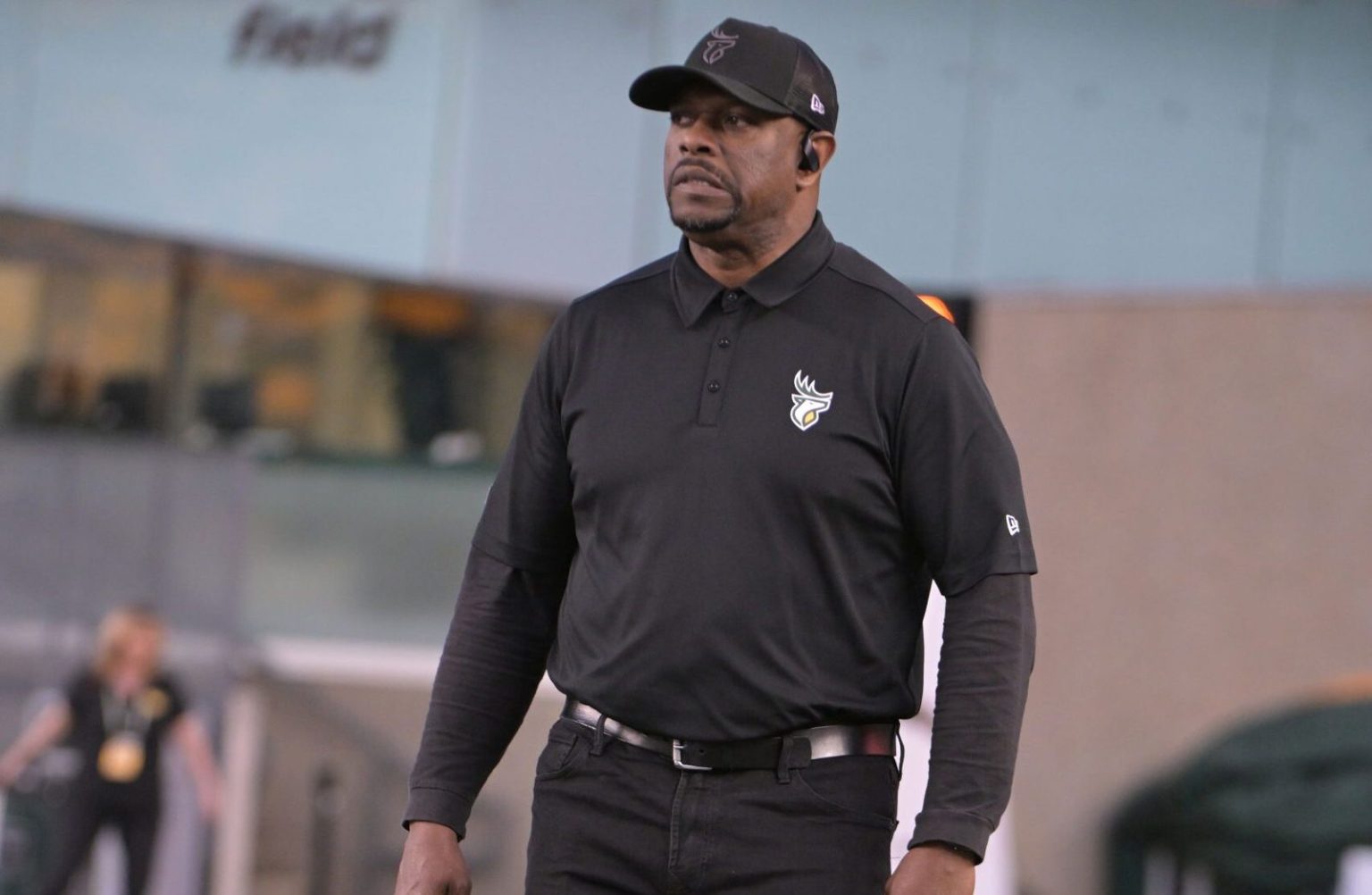
Photo courtesy: Dale MacMillan/Edmonton Elks
The Edmonton Elks were one of the big winners of the Canadian Football League Players’ Association’s 2025 team report cards, but general manager Ed Hervey isn’t interested in taking a victory lap.
Speaking from the CFL Winter Meetings in Calgary, the 52-year-old executive did not pull any punches when asked about his players’ responses, questioning the validity of the published results and demanding more accountability from the union.
“If I can be honest with you, we did our own internal survey as well, and our grades were better than what was publicly noted,” Hervey said. “I don’t really understand the grading system, to be quite honest with you.”
“If there is a level of improvement, I didn’t really, honestly look as to what level that it went up or down. It was brought to my attention that the grades were out, I kind of chuckled and kept moving to stuff that was more important, to be honest with you. If I’m going to draw a positive, yes, if we’re moving, that’s a positive in the right direction. That’s what we’re trying to do, but we have a bar that’s far greater than any grading system can place on us.”
The Elks were the lowest graded team on the CFLPA’s inaugural report card following the 2024 season, receiving an overall D+. Edmonton was also the only franchise to receive an F in any single category, doing so in both nutrition & diet and training camp.
After sweeping organizational changes that included the hiring of Hervey, those marks improved dramatically on the 2025 version of the report card. While the Elks still ranked fifth league-wide, they jumped to a B- overall and received the first-ever A+ in a single category for team travel.
That did not appear to satisfy Hervey, who chose to fixate on one particular grade for nutrition & diet.
“If I did have one question, I would just like to know how the grades work, because I’ve got to say this publicly: our food was definitely better than a C god darn minus. We had a chef in there that was cooking every day, so I don’t know where C- came from if that’s the case,” he stressed. “I’m going to defend the people that cook the food and let them know publicly that our grades internally were much higher and we’re going to stick with that.”
“The people that are involved with the food and have nothing really to do as far as working in the organization, those people have businesses outside of public scrutiny. We in football, we can deal with public scrutiny. It’s the businesses who are apprehensive about doing it, especially when they don’t know how they’re being graded is the concern. At least we’d like to see how they’re graded. How does it work? Is the meals tied to other things? Because I didn’t have a C- meal.”
At least one respondent to the CFLPA survey seemed to agree with Hervey, writing that the food in Edmonton was “the best it’s been in years.” However, they noted that players had to pay for those meals, which drove down the grade in that category. Also included under the same umbrella was the availability of a club dietician, as well as the quality and quantity of nutritional supplements provided by the team.
“There are no free meals on any team, so I don’t know where that grade came from,” Hervey insisted.
Elks’ head coach Mark Kilam backed up his boss’s assessment that the meals provided were top-notch. He also made clear that the franchise was fully aware of its own deficiencies prior to the report card being released, including concerns over what one respondent dubbed “terrible rehab planning.”
“When we finished our season, we did a three-week post-mortem and combed through every detail of our organization. We knew that there were some challenges in some certain areas before that,” Kilam said. “We don’t rely on report cards. We handle our business. We were very detailed in what we do, and we’re trying to take steps to remedy any and all concerns.”
CFLPA report card grades are generated from responses to a 78-question anonymous survey distributed to all CFL players that included multiple-choice, rating, and open-ended questions. Scoring for each category is then averaged and normalized to translate the data into standardized letter grades with assistance from Dr. Desmond McEwan, PhD, an assistant professor in sport psychology at the University of British Columbia.
Hervey stated that the Elks’ internal process for assessment is much more straightforward and provides clarity in areas that he doesn’t receive from the CFLPA.
“Ours are very simple questions. Ours is a very simple five-star system, and that’s it. It’s not tabulated,” he explained. “I would like to see the grading, that’s all. I’d like the union to give us the sheets, to show us the questions and how they’re graded, so we can at least know.”
One aspect where the general manager appeared to concede was the persistent complaints made by opposing teams regarding the visiting hotel in Edmonton, which was called “unacceptable” in the report card. Sources tell 3DownNation that facility was chosen due to a familial connection with a former high-ranking team official, but Hervey was clear that the business relationship has now ended.
“That deal was done before I got here, and we’ve made the improvements. We’re changing the hotel this year. That was a contractual thing, so don’t pin that on us,” he emphasized. “We’ll put it on the record. We are going back to the Westin this year, so everyone league-wide can smile and feel good about that.”
Whether teams can feel good about the report cards is another story, and they are certain to remain controversial. While the NFL recently filed a grievance against its players’ association to prevent their version of the report card, the CFL has not indicated that it will follow suit.
That is unlikely to please decision-makers like Hervey, regardless of how well their teams actually perform.