

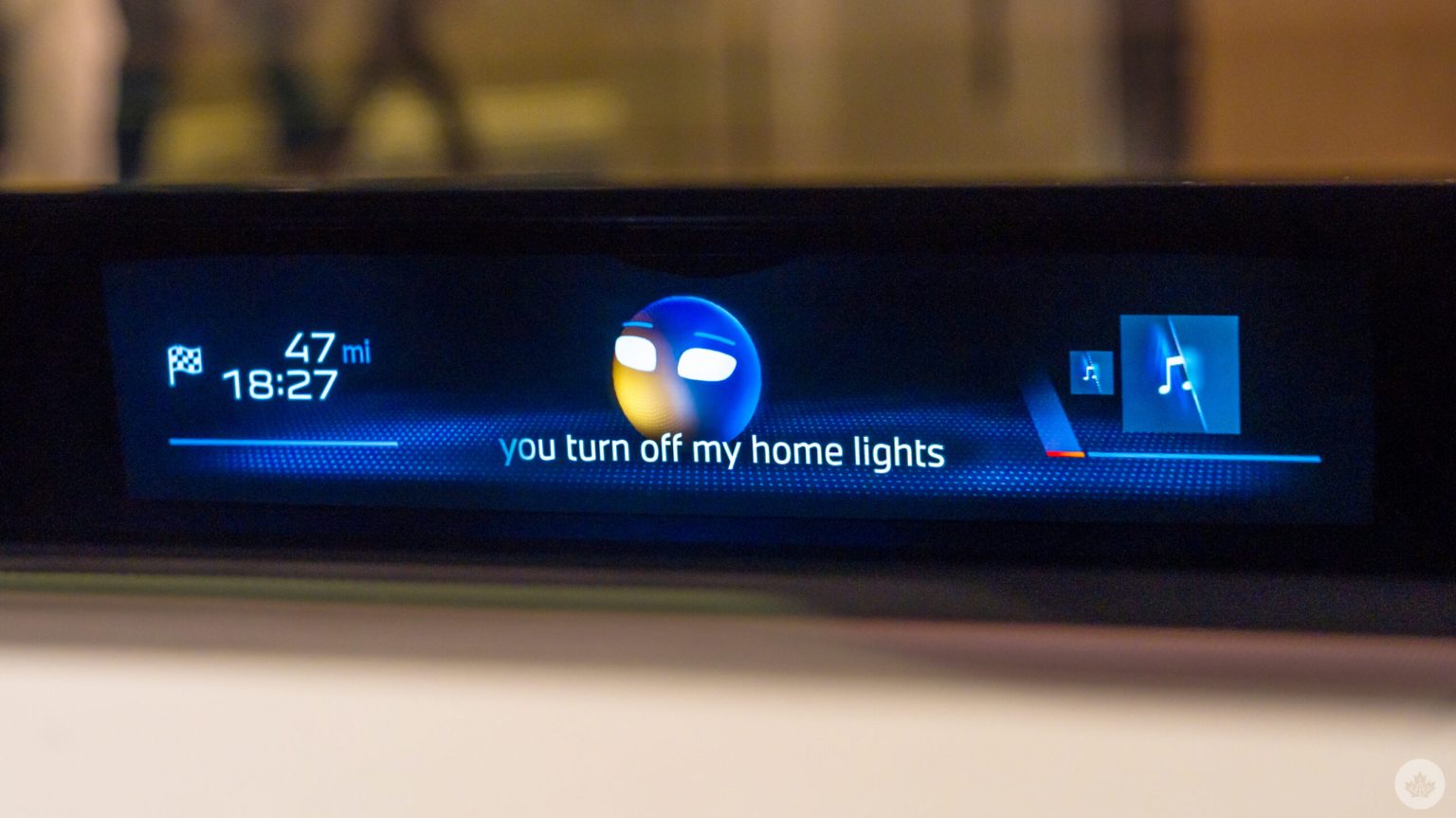
One of the primary activations at both Amazon and BMW’s presence at CES 2026 in Las Vegas was showcasing what Alexa+ will be like while driving in a vehicle. The 2026 BMW iX3 will be among the first cars to integrate Amazon’s more advanced agentic AI, turning it into more of a synthetic companion while cruising the road.
This demo comes mere weeks after Amazon released Alexa+ to Canada as the first market outside the U.S. to get it. Converting that increased intelligence into an in-car experience means fewer single-sentence commands and more unfolding conversation with natural tone and purpose.
Seeing this in action with Clint Jones, senior product manager, Alexa Auto at Amazon — albeit not on the road — provides a few clues as to how this integration will work for drivers and passengers when the Alexa Custom Assistant rolls out in the coming months.
From scenic drives to missed sunscreen
Some automakers have integrated Alexa going back about a decade. I recently tried it again when test-driving a Mustang Mach-E back in November 2025, and in an age of ChatGPT, Gemini, and Claude, it just feels dated and clunky by comparison. Sure, you can control smart home devices from just about anywhere and ask for music, but it isn’t all that functional or varied by today’s standards. That only grew more apparent when testing Alexa+ through the latest Echo devices at home a few weeks later.
Stepping into the iX3, the most immediate difference is that Alexa+ ties in directly with the vehicle’s own settings and controls. While navigation isn’t new to the platform, the extent of its command and control moves up a notch. Saying, “find someplace scenic around here,” presents nearby viewpoints with respective distances. Picking “number three” simply reroutes to that destination.
But what about making a stop in between? “Hey BMW, I forgot sunscreen. Can you take me to CVS,” the driver says. While Alexa seemed to struggle with the name of the pharmacy, it understood the underlying need to stop at one. “Let’s go to number two on the way,” Jones says, and Alexa adds a Walgreens stop en route to the final destination.
There are two things at work here that already indicate a key difference. First, the old Alexa would’ve likely stumbled over recognizing the brand, or worse yet, might’ve required multiple attempts to get phrasing right. Second, context wins out because “sunscreen” implies purchase from a store, while a relevant nearby location en route appears without being specific. The system didn’t need perfection from either of us to proceed.
The other overlying element is that it’s far more conversational, meaning that you can string together commands or simply strike up a back-and-forth chat. For example, if, instead of starting things out the way we did above, the opener went something like, “I’d like to drive somewhere scenic with plenty of sun, but want to make sure I have everything I need for the trip. Help me out,” Alexa would then lay out a list of possible items, which would then lead to places to go to get them.
Blending Knowledge and Action
Music and podcasts have always been central to how Alexa works, regardless of whether it’s in the car or not. In this case, context is far more fluid. During the demo, Jones asks about a famous song associated with Las Vegas, and Alexa responds with “Viva Las Vegas” by Elvis Presley. He then says, “Can you play that for me,” and without any further prodding, it queues the song on Amazon Music.
This scenario would work with whichever music streaming service is linked as the default on your Alexa account. So, if it’s Spotify or Tidal, for instance, the song will just play there. It can go even further in recommending podcasts on a particular topic or category, as well as suggest ones that fall within a set time limit, so if you prefer a 30-minute (or less) option, it can deliver that.
This echoes the Alexa+ experience at home, where it acts more like an agent than a simple assistant. No need for clarification or repeating the title. Nor is there the awkward back-and-forth of starting every sentence with, “Alexa.” Thus, a command or request doesn’t have to be siloed or fall into a category, like media, navigation, or knowledge. You just talk, and that’s it.
To be fair, music integration may not feel as dramatically different as other integrations will with Alexa+ in the car because this was always one of the original Alexa’s stronger features. Nevertheless, I like the idea of saying less to get more when listening to music.
Climate, comfort, and diagnostics
The tighter integration also extends to broader vehicle controls. “Hey BMW, I’m really hot,” Jones says. The assistant lowers the temperature and understands a follow-up request to increase fan speed through basic terminology. Moments later, he tells it to activate the passenger seat’s massage function and adjust ambient light settings. The infotainment screen changes menus, diving into relevant settings without trying to find them manually — a challenge at any time, given the breadth of BMW’s system.
Depending on the vehicle, you can apply this more intuitively, like adjusting climate control for the rear passengers independent of the front. In-cabin HVAC control isn’t new to voice assistants, except it’s generally been limited to increasing or decreasing temperature, not necessarily controlling multiple aspects in one go.
Knowing more about the vehicle’s own health and functionality under the hood is another major change here. Without driving, there were limited ways to show this kind of integration, but I was able to glean some insight into the underlying capability. Rather than use an OBD-II adapter to read diagnostic codes, Alexa+ can see and interpret them, but that appears to be the extent of it. Each automaker has to decide how far this goes.
Not surprisingly, BMW opts not to take it far at all in the iX3. Rather than tell drivers how to fix a problem themselves, the system will guide you to visit or set up an appointment with an authorized service centre or dealership. When a check engine light pops up, Alexa+ could explain what’s happening and why it matters, without encouraging risky do-it-yourself repairs.
In safety-critical scenarios, like a flat tire or serious engine issue, the system could speak up on its own. That’s also on the automaker, so BMW’s design choices may not be the same as others who implement the same thing.
The smart move here is bringing in the car’s user manual, so that Alexa can respond with conversational and contextual answers to drivers’ detailed questions. That also opens up how-to situations where you can learn how to perform a function or do something in the car without flipping through a book or drawn-out PDF.
Smart home from the car
Since you’re linking your Amazon account, the vehicle inherits the same smart home graph that already exists at home. The car doesn’t need to relearn or configure the lights, plugs, thermostats, locks, cameras, and scenes you’ve already set up. If you say, “turn off the living room lights” at home, that exact phrasing works in the iX3. The main thing is that the car’s own SIM can handle all this and cut out the phone in the process.
Alexa+ integrates into your existing smart home ecosystem, so long as the devices are compatible. While a pretty extensive list at this stage, the main point here is that the system is proactive as much as reactive. It respects the driving context, even if it won’t throw up surveillance video on the dash. Alexa+ can respond to questions like, “Did anyone show up?” or “Was a package delivered?” without visual distraction.
During the demo, we asked the car to turn home lights on and off, and even change their color, all of which happens seamlessly. Ring integration allows the assistant to report whether a security camera at home detects motion, producing AI-driven summaries rather than raw video feeds. Mind you, nothing really stops you from picking up your phone and viewing the live feed anyway, but at least there’s an attempt to dissuade drivers from doing so.
For example, if someone appears at the door, Alexa+ will pull up a notification and provide verbal context; there’s no need to scroll through notifications.
Privacy, profiles, and personalization
A smarter or more elaborate agentic AI also raises questions about privacy. Jones says linking to an Amazon account migrates the same privacy controls already set in the Alexa app, thereby carrying over interaction history, permissions, and personalization settings into the vehicle.
A lot of that depends on what you want to allow. More context enables smarter, more proactive behaviour, whereas tighter restrictions reduce personalization. That’s why you may find that Alexa+ can tell when someone has arrived but not necessarily know who it is unless you’ve allowed it to recognize friends and family.
That also goes the other way. What happens when two or more people share the same iX3? BMW’s vehicle profiles work alongside Alexa profiles so that the system ensures data, preferences, and permissions don’t cross over between users. The idea is that when one driver exits and another enters, Alexa’s knowledge resets to the active profile.
We weren’t able to test this out in the demo, so I can’t be certain how well it works. Since it’s also heavily dependent on the automaker’s own profile setup, the experience may differ slightly between BMW and another brand.
Talking in more cars soon
It won’t cost extra to use Alexa+ in the car since it’s part of the package. That can cost $27.99 per month, but you’re better off saving money by getting a Prime Membership instead, since it’s included anyway. If you already have Prime, Alexa+ will be available to you as soon as Amazon rolls it out to your account.
The BMW iX3 is the first of what is likely to be several vehicles integrating Alexa+, and this is the first polished look at that experience. Noticeably better than basic Alexa implementations off the bat, it feels less like a voice assistant bolted onto a dashboard and more like a system designed around conversation in the cabin.
As someone who’s also been testing Gemini in the car via Android Auto, this kind of interaction makes using an AI in the car feel far more intricate and adaptive. We’ll have to see how it all pans out once it evolves and expands. Cars have been adding tech features for years; only features like this arguably mean no longer learning the car, but more the car learning the driver.
MobileSyrup may earn a commission from purchases made via our links, which helps fund the journalism we provide free on our website. These links do not influence our editorial content. Support us here.